Don't Buy the A1E Oled Until You Read This Full Analysis
Introduction
The Sony A1E OLED arrived amid significant attention: an OLED panel married to Sony's processing and a novel approach to sound delivery. For buyers attracted to high-contrast images, thin design, and an elegant living-room centerpiece, the A1E promised much. Yet buying a TV is an investment that should match specific real-world needs — viewing environment, content types, and long-term service expectations. This analysis examines the A1E from the perspective of those practical concerns, offering an in-depth review of picture performance, sound, software, reliability considerations, and how it compares to plausible alternatives. The goal is to equip prospective buyers with the context they need before deciding.
Detailed Product Review and Analysis
Design and Build
The A1E is unmistakably designed to be seen. It favors an ultra-slim profile and a minimalist aesthetic that allows the panel to sit nearly flush with the wall. The television's engineering integrates the speakers into the panel assembly rather than disguising them in a traditional bottom-firing soundbar. This produces an elegant, gallery-style appearance that suits modern living rooms where the TV is also a piece of furniture.
Build quality leans toward premium: materials and fit-and-finish are consistent with Sony's positioning. However, a slim profile often means trade-offs in cooling and speaker aperture size, factors that influence both long-term heat management and acoustic performance under load.
Picture Quality: What Matters Most
At the heart of the A1E is an OLED panel, which brings the hallmark strengths of self-emissive pixels: absolute blacks, near-infinite contrast, and wide viewing angles. In typical dark-room film viewing — the scenario for which OLEDs are often recommended — the A1E excels. Black scenes reveal subtle shadow detail without the elevated black-floor brightness typical of many LED-lit displays. For cinematic content and HDR films mastered for deep blacks, the picture is immediately compelling.
Color reproduction on the A1E is generally accurate out of the box. Sony's video processing focuses on natural, film-like color rather than overly saturated output. The result is a pleasing palette for movies and drama content where fidelity is prioritized over punchy, exhibition-style color. Skin tones are handled with particular care, which benefits narrative viewing.
Where the A1E shows its limitations is peak HDR brightness. OLEDs as a category are often outpaced by premium LED/LCD displays when it comes to specular highlights and sunlit scenes. The A1E is no exception: while contrast and tone mapping are excellent, scenes that rely on very high sustained brightness to present impact (e.g., bright outdoor HDR footage) can look less 'punchy' than on high-end LED alternatives with stronger peak luminance.
Motion, Upscaling, and Processing
Sony's processing pipeline in the A1E aims to minimize judder and maximize the perceptual crispness of motion. For live sports and fast-moving content, motion artifacts are reduced and interpolation options are available for viewers who prefer smoother motion. Upscaling lower-resolution content benefits from Sony's motion and detail algorithms, which generally preserve texture and avoid excessive artificial sharpening.
That said, preferences vary: some viewers dislike frame interpolation for film content, so the option to disable motion processing is essential and present on the A1E. For mixed-use households that watch native 24fps movies and streamed sports, the ability to tune motion settings on a per-input or per-app basis is a practical advantage.
Audio — Acoustic Surface Explained
One of the A1E's signature features is its Acoustic Surface technology, which uses actuators behind the screen to vibrate the panel and produce sound. This contrasts with traditional speaker placements and can create an impression that dialogue comes directly from the actors' mouths on screen. For many viewers, that on-screen localization is a notable improvement over side- or bottom-firing speakers.
Shop the latest TVs & Home Theater picks on Amazon.
View Offers →However, Acoustic Surface is not a substitute for a dedicated high-end audio system. While dialogue clarity and center imaging are strong, bass extension and overall dynamics are more limited than a separate soundbar or AV system. Buyers should think of the A1E's audio as exceptionally good for built-in speakers, but not a replacement for an external sound system when large-room, immersive audio is a priority.
Smart Platform and Connectivity
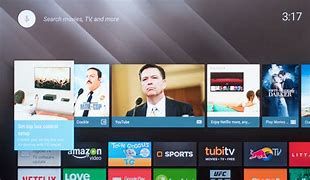
The A1E ships with Android TV as its smart platform. That brings a broad app ecosystem, voice search, and third-party integrations. Android TV's advantages include flexibility and a wide selection of streaming apps; the disadvantages can be uneven app performance and occasional UI clutter compared to leaner platforms.
Connectivity is adequate for most users: multiple HDMI inputs support set-top boxes, game consoles, and streaming sticks. Buyers focused on next-generation gaming features should be aware that the A1E predates HDMI 2.1-era features (such as VRR, 4K@120Hz on modern consoles, and advanced ALLM behavior). For console gamers with the latest hardware, newer TV models include richer gaming feature sets.
Durability, Burn-in, and Long-Term Use
OLED technology carries a well-known characteristic risk: permanent image retention, commonly referred to as burn-in, when static elements (logos, HUDs, channel tickers) are shown for prolonged periods. Sony integrates software mitigations and pixel refresh functions designed to minimize retention risk, but burning remains a practical concern for heavy static-content use.
For typical varied viewing — movies, TV shows, mixed channel surfing — the practical risk of burn-in is low. Households that use a TV as a PC monitor, or that keep static channel logos or game HUDs visible for extended sessions, should take that risk seriously. Adjusting brightness, enabling screen-shift and pixel-protect features, and rotating content can reduce likelihood but do not eliminate it.
Real-World Use Cases
- Home cinema enthusiasts: The A1E is compelling in dark rooms where deep blacks and film-accurate color are prized. Its sound design enhances dialog-centric viewing without immediate need for a soundbar.
- Living room generalists: For households with mixed usage — streaming, occasional sports, light gaming ��� the A1E is an attractive, stylish option, but buyers should factor in brightness limits for very sunlit rooms.
- Gamers: Console players, especially those using the latest generation consoles, will benefit more from TVs with HDMI 2.1 features and higher sustained brightness. The A1E remains playable, but it is not optimized for cutting-edge gaming features.
- Bright-room viewers: If the living room receives significant sunlight during viewing hours, a high-brightness LED/LCD may produce a more satisfying HDR experience.
Pros & Cons
- Pros:
- Exceptional black levels and contrast, delivering a cinematic image in dark rooms.
- Acoustic Surface provides on-screen localized sound for better dialogue intimacy.
- Elegant, minimalist design that integrates well into modern interiors.
- Strong color accuracy and natural image processing aimed at film fidelity.
- Android TV offers a wide app ecosystem and voice search functionality.
- Cons:
- Lower peak HDR brightness compared with top-tier LED/LCD models, reducing highlight impact in bright scenes.
- Potential risk of OLED image retention/burn-in for heavy static-content users.
- Lacks the latest gaming features (e.g., HDMI 2.1 VRR and 4K@120Hz) found in newer sets.
- Built-in speakers useful but not a replacement for a dedicated home theater audio system.
- Premium price at launch compared to mid-range alternatives.
Comparison: A1E vs Alternatives
| Feature | Sony A1E OLED | Typical Contemporary OLED (e.g., LG E-series) | Premium LED/LCD (High-end QLED) |
|---|---|---|---|
| Black Levels & Contrast | Outstanding — deep blacks and infinite contrast | Outstanding — similar OLED strengths | Very good, but backlight blooming can affect contrast in some scenes |
| HDR Peak Brightness | Moderate — excellent tone mapping, less extreme highlights | Moderate — similar trade-offs across OLEDs | Superior — stronger highlights, better bright-room performance |
| Audio | Acoustic Surface — on-screen localization, good dialogue | Usually conventional front/side-firing speakers | Often weaker built-in audio; buyers pair with soundbars |
| Smart Platform | Android TV — broad app support | webOS or alternatives — fluid UI, app availability varies | Platform depends on brand — typically robust app sets |
| Gaming Features | Functional for most games; lacks recent HDMI 2.1 features | Varies by model; some newer OLEDs include HDMI 2.1 | Often leads in high refresh and VRR support |
| Burn-in Risk | Present — typical of OLEDs | Present — typical of OLEDs | Low — LCD technologies do not suffer the same burn-in risk |
| Design | Ultra-thin, premium styling | Thin, premium styling | Varies; can be thicker to accommodate backlight hardware |
Buying Guide: What to Consider Before Choosing the A1E
1. Viewing Environment
Buyers should assess how often the TV will be used in bright, sunlit conditions versus dim or dark rooms. OLED excels in controlled, darker environments where true black and shadow detail are most visible. If a TV will sit opposite a large window and daytime viewing is common, a high-brightness LED/LCD may deliver a more satisfying HDR experience.
2. Primary Content Types
Consider what will be watched most often. The A1E is particularly strong for cinematic movie nights, streaming dramas, and high-quality, film-centric content where color fidelity and contrast matter. For heavy live-sports viewing or HDR content that relies on spectacular highlights, other options may better preserve peak brightness.
3. Gaming Needs
Modern console gamers should check for HDMI 2.1 features (VRR, ALLM, 4K@120Hz) if those are important. The A1E supports current-generation consoles for standard play but lacks some of the advanced gaming conveniences of later models. For competitive gamers or those wanting the smoothest, fastest response with high refresh rates, a gaming-focused TV could be preferable.
4. Sound Priorities
Acoustic Surface enhances dialogue localization, which helps for conversational clarity and small-room listening without a soundbar. However, for cinematic surround sound or deep, room-filling bass, a separate sound system remains the best path. Buyers should budget separately for audio if big-room immersion is desired.
Find top-rated TVs & Home Theater products at great prices.
Browse Now →5. Longevity and Usage Patterns
Evaluate whether usage patterns include static on-screen elements for extended periods (news tickers, channel logos, game HUDs). If yes, plan for an alternative or adopt mitigation strategies: lower static-element brightness, enable pixel shift or screen saver features, and avoid using the TV as a static PC monitor.
6. Smart Platform Preferences and Updates
Android TV provides access to many apps and integrations, but it can sometimes feel less streamlined than proprietary systems. Buyers who prefer a particular smart platform should confirm app availability and performance for the services they use most.
7. Budget and Value Over Time
OLED technology carries a premium. Consider whether the A1E's combination of picture quality, design, and integrated audio justifies the price compared with other OLED and premium LCD alternatives available at the time. Factor in expected service life and potential resale value when calculating long-term cost-per-use.
8. Warranty and Support
Check the length and coverage of the manufacturer's warranty, specifically for panel-related issues. Some manufacturers and retailers provide extended or burn-in-specific coverage for peace of mind; this can be a deciding factor for cautious buyers.
Conclusion
The Sony A1E OLED represents a clear expression of the strengths and compromises inherent to OLED TVs. It delivers exceptional black levels, natural color, and a novel audio approach that can make on-screen action feel unusually intimate. For buyers prioritizing cinematic picture quality in dim viewing environments and those who value integrated sound that localizes dialog to the screen, the A1E is an attractive proposition.
However, buyers whose primary concerns are bright-room HDR spectacle, the latest gaming features, or continuous static-content use should weigh those needs carefully. The trade-offs — moderate peak brightness, absence of the newest HDMI feature set, and the ongoing consideration of OLED burn-in — mean the A1E is not the unambiguous best choice for every household.
In short, prospective purchasers should match the A1E's characteristics against how they actually use a TV. For a dedicated home theater in a controlled lighting environment and for viewers who prize image fidelity and style, the A1E remains compelling. For others — especially gamers seeking next-generation connective features or buyers who need a TV for bright-room daytime viewing — alternative models may offer a better fit.